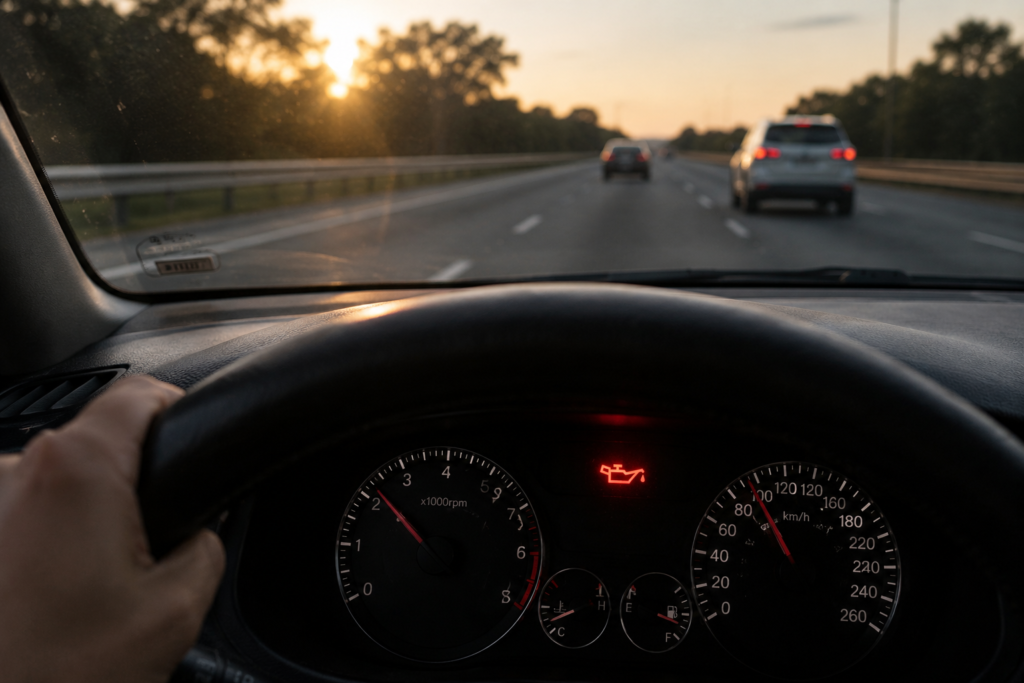
Picture this: you’re cruising down the highway, music playing, coffee in hand, and suddenly a little red light pops up on your dashboard. Your stomach drops. It’s the oil pressure warning light, and it’s staring right back at you. If this has happened to you, you already know that sinking feeling. If it hasn’t yet, trust us — knowing what to do before it happens can save you thousands of dollars and a whole lot of stress.
The oil pressure warning light is one of the most serious alerts your vehicle can give you. Unlike some dashboard lights that can wait until your next scheduled service, this one demands immediate attention. Ignoring it — even for a few minutes — can lead to catastrophic engine damage that no amount of oil will fix. In this guide, we’re going to walk you through everything you need to know: what causes it, what to do when it comes on, and how to prevent it from happening again.
Understanding Your Oil Pressure Warning Light
How the Light Functions as a Safety Indicator
Your car’s engine has dozens of moving metal parts that grind against each other at high speeds. Oil acts as the lifeblood of your engine, creating a thin but incredibly important film between those parts to reduce friction and heat. The oil pressure warning light is connected to an oil pressure sensor that monitors whether oil is circulating through the engine at the correct pressure. When that pressure drops below a safe threshold, the sensor triggers the warning light on your dashboard.
Think of it like a blood pressure monitor for your engine. When the pressure is good, everything runs smoothly. When it drops dangerously low, alarms go off — because something serious might be happening.
Difference Between the Oil Pressure Light and Oil Change Reminder
Here’s a common mix-up that trips up a lot of drivers: the oil pressure warning light is not the same as your oil change reminder. The oil change reminder (often showing as a wrench icon or a mileage counter) is simply telling you it’s time for routine maintenance. The oil pressure light — usually a red icon that looks like an old-fashioned oil can — is telling you there’s a problem right now that needs addressing immediately.
If you see the red oil can symbol light up, don’t brush it off thinking you just need an oil change. That could be a very expensive mistake.
Dashboard Symbols and Their Meanings
Most vehicles use a red symbol resembling a dripping oil can to indicate oil pressure issues. Some newer vehicles may use amber or yellow versions of this light to indicate low oil level, which is a slightly less urgent but still important warning. Always check your owner’s manual to understand exactly what your specific vehicle’s symbols mean — they can vary slightly between manufacturers.
Common Causes of Oil Pressure Warning Light Activation
Low Oil Level in the Engine
This is the most common and most straightforward cause. If your engine doesn’t have enough oil, there simply isn’t enough fluid to maintain proper pressure throughout the system. Oil levels can drop due to normal consumption over time, a slow leak you haven’t noticed, or because you’ve gone too long between oil changes and the oil has degraded significantly.
The good news? If low oil level is the culprit and you catch it early, the fix is relatively simple: add oil and monitor the situation. The bad news is that if your engine has been running with low pressure for any length of time, damage may have already begun.
Faulty Oil Pressure Sensor or Switch
Sometimes the warning light isn’t telling you there’s actually a pressure problem — it’s telling you the sensor measuring the pressure has gone bad. Oil pressure sensors are relatively inexpensive components that can fail over time due to heat, vibration, and general wear. A faulty sensor might send incorrect readings to your dashboard, triggering the warning light even when oil pressure is perfectly fine.
This is why it’s so important not to just assume the light means the sensor is bad and ignore it. You need to verify which situation you’re actually dealing with before making that call.
Engine Wear and Bearing Problems
If your engine has high mileage and hasn’t been maintained properly, internal components like crankshaft bearings can wear down over time. When bearings wear out, the oil pressure drops because oil leaks past the worn surfaces rather than building up proper pressure. This is a more serious situation and usually means significant engine work is in your near future.
Other causes can include a failing oil pump, a blocked oil pickup tube, or even the wrong type of oil being used in the engine. All of these scenarios can result in inadequate oil circulation and trigger that dreaded warning light.
What to Do When the Light Comes On
Safe Driving Practices When the Warning Light Activates
The moment that oil pressure light illuminates, your number one priority is to stop driving as soon as it’s safely possible. We know that’s not always convenient — you might be on the highway, in the middle of an intersection, or running late for something important. But continuing to drive with low oil pressure can destroy your engine within minutes.
Turn off any non-essential electrical loads (like air conditioning) to reduce strain on the engine, but don’t turn the engine off while you’re still moving in traffic. Signal, merge safely, and get yourself to the side of the road or the nearest parking lot.
Finding a Safe Location to Pull Over
Look for a flat, stable surface away from traffic. A parking lot, a wide shoulder, or a side street are all good options. Avoid pulling over on a steep incline if possible, as this can affect how oil distributes in the engine and may complicate your inspection. Turn on your hazard lights so other drivers can see you.
Steps to Take Before Attempting Any Repairs
Once you’ve safely pulled over, turn off the engine and wait about five minutes before opening the hood. This lets the oil settle back into the oil pan and gives hot components a moment to cool slightly. Never open a radiator cap on a hot engine, and be careful around any hot surfaces under the hood.
Checking Your Oil Level
How to Locate the Dipstick and Check Oil Levels
Pop the hood and locate the oil dipstick — it usually has a brightly colored handle (yellow or orange) and is typically labeled with an oil can symbol. Pull it out, wipe it clean with a rag or paper towel, reinsert it fully, and pull it out again. Look at where the oil line falls between the two marks on the dipstick (usually labeled MIN and MAX, or LOW and FULL).
If the oil level is below the minimum mark, that’s likely your problem. If the oil looks dark, gritty, or milky, that’s a sign of a more serious issue like contamination or overdue maintenance.
Adding Oil If Levels Are Low
If you have oil on hand (always a great idea to keep a quart in your trunk), carefully add small amounts through the oil filler cap on top of the engine. Add a little, wait a minute, check the dipstick again, and repeat until you’re within the acceptable range. Don’t overfill — too much oil can be just as harmful as too little.
Understanding Oil Viscosity and Specifications
Always use the oil viscosity recommended in your owner’s manual. You’ll see numbers like 5W-30 or 0W-20 — these ratings indicate how the oil flows at different temperatures. Using the wrong viscosity can affect oil pressure, so don’t just grab the cheapest bottle on the shelf. Match the spec to your vehicle.
Diagnosing Sensor and Electrical Issues
How to Distinguish Between Sensor Failure and Actual Pressure Problems
If you’ve checked your oil level and it’s fine, the oil itself looks clean and healthy, and the engine sounds normal (no knocking, ticking, or unusual noises), there’s a reasonable chance you’re dealing with a faulty sensor rather than a real pressure problem. However, you should still have this confirmed by a professional with an actual mechanical oil pressure gauge — not just by guessing.
Testing the Oil Pressure Sensor
A mechanic can temporarily install a mechanical oil pressure gauge directly into the engine to get an accurate reading that doesn’t rely on the sensor. If the mechanical gauge shows normal pressure while the warning light is still on, the sensor is almost certainly the problem. Replacement sensors are usually affordable and relatively easy to swap out.
Checking Related Electrical Connections and Wiring
Before replacing the sensor outright, it’s worth checking the wiring harness that connects to it. Look for any obvious damage, corrosion, or loose connections. Sometimes the fix is as simple as reconnecting a plug that has worked itself loose over time. A visual inspection takes two minutes and could save you the cost of an unnecessary part.
When Engine Damage May Be Occurring
Signs of Serious Engine Problems Beyond Low Oil
If you hear a knocking or tapping sound coming from the engine — especially if it gets louder with engine speed — that’s a major red flag. This sound is often described as a “rod knock” and indicates that engine bearings are already damaged or failing. At this point, continuing to run the engine risks permanent, irreparable damage.
Symptoms of Worn Bearings or Internal Damage
Beyond knocking sounds, other symptoms of internal engine damage include excessive smoke from the exhaust, a burning smell, metal particles visible in the oil, or the engine running rough or misfiring. These symptoms combined with an oil pressure warning light are a clear signal that you need professional help immediately — not tomorrow, not next week.
Why Ignoring the Warning Can Lead to Catastrophic Engine Failure
Without adequate oil pressure, metal parts make direct contact with each other at high speeds. This generates extreme heat and friction that can seize engine components in a matter of minutes. A seized engine typically means a complete engine replacement — a repair that can easily run anywhere from $3,000 to $8,000 or more depending on your vehicle. Compare that to the cost of an oil change or a pressure sensor, and the math becomes very clear: act fast, act smart.
Professional Help and Next Steps
When to Contact a Mechanic or Roadside Assistance
If you’ve pulled over, checked the oil, and aren’t comfortable diagnosing the issue yourself — or if you’ve topped up the oil and the light is still on — don’t drive the vehicle. Call roadside assistance or have the car towed to a trusted mechanic. Driving with that light on is gambling with your engine, and the house always wins.
Getting a Proper Diagnostic Test
A good mechanic will connect a mechanical pressure gauge, inspect the oil pressure sensor, check for leaks, and potentially do an oil analysis to assess the health of your engine. This comprehensive approach will give you a clear picture of whether you’re dealing with a simple sensor swap or something more involved.
Preventive Maintenance to Avoid Future Issues
The best way to avoid dealing with oil pressure problems is to stay on top of regular oil changes, check your oil level monthly, and pay attention to any unusual noises or smells from your engine. Use the correct oil specification for your vehicle, fix any small leaks before they become big ones, and follow your manufacturer’s recommended maintenance schedule. A little prevention goes a long way toward keeping that warning light off your dashboard.
Frequently Asked Questions
Can I drive with the oil pressure warning light on?
No — you should not continue driving when the oil pressure warning light is illuminated. Pull over safely as soon as possible and turn off the engine. Continuing to drive can cause severe and potentially irreversible engine damage within minutes.
What does it mean if the oil pressure light comes on and then goes off?
An intermittent oil pressure light that comes on briefly and then goes off can indicate a few things: oil level that’s borderline low, a failing oil pressure sensor, or early-stage bearing wear. Even if the light goes off on its own, you should have it checked out soon — intermittent warnings often become permanent ones if left unaddressed.
How much does it cost to fix an oil pressure problem?
The cost depends heavily on the cause. Replacing a faulty oil pressure sensor typically costs between $100 and $250 including labor. Topping up oil costs just a few dollars. However, if there’s internal engine damage like worn bearings, repair costs can range from $1,500 to $8,000 or more. Early detection is always cheaper.
How do I know if my oil pressure sensor is bad or if I really have low oil pressure?
The best way to determine this is to have a mechanic use a mechanical oil pressure gauge — a physical gauge that screws directly into the engine — to measure actual pressure independent of the electronic sensor. If the mechanical gauge reads normal pressure, the sensor is likely faulty. If it shows low pressure, the problem is real.
Can low-quality or old oil cause the oil pressure light to come on?
Yes, it can. Oil that has degraded significantly or has the wrong viscosity for your engine may not circulate properly or maintain adequate pressure, especially in cold temperatures. Using the correct oil specification and keeping up with regular oil changes is one of the simplest ways to prevent oil pressure issues from occurring in the first place.